Eerste positieve resultaten bestrijding koraalziekte SCTLD
First positive results against coral disease SCTLD
Hans Hofstra, published 2024-03-08
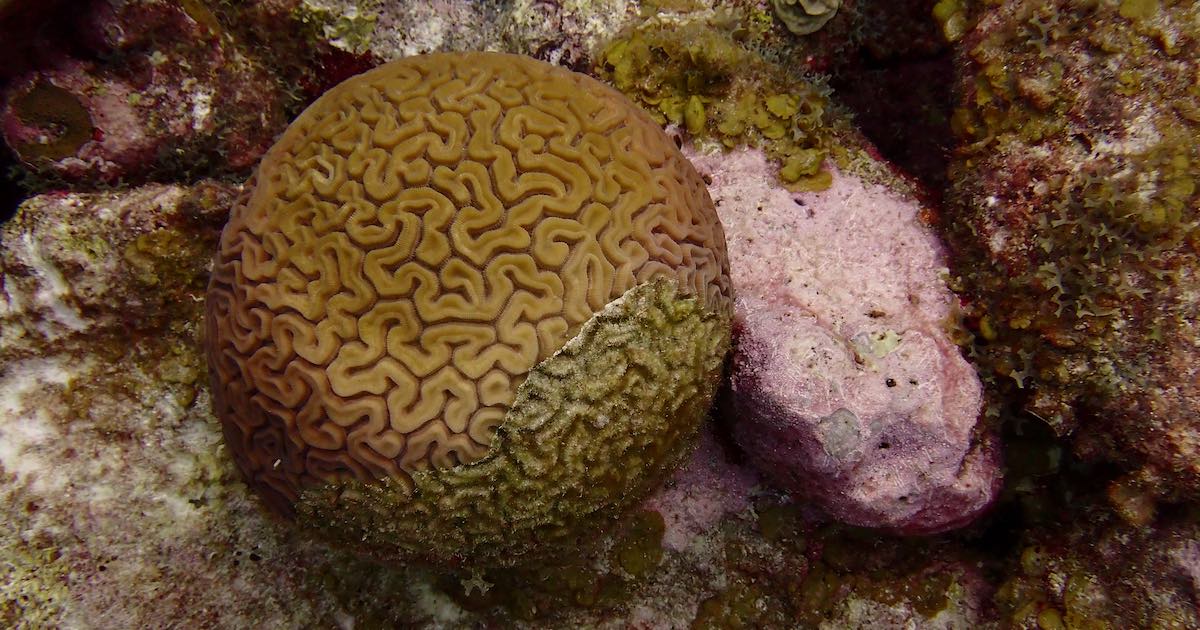
A piece of treated brain coral that no longer has symptoms of the coral disease SCTLD.
The first positive results are visible in the control of SCTLD. The coral disease causes, for example, large pieces of brain coral to die and then turn white. STINAPA has been working to combat this disease using antibiotics since December 2023 . Bonaire.nu put it to the test and looked at the nature organization.
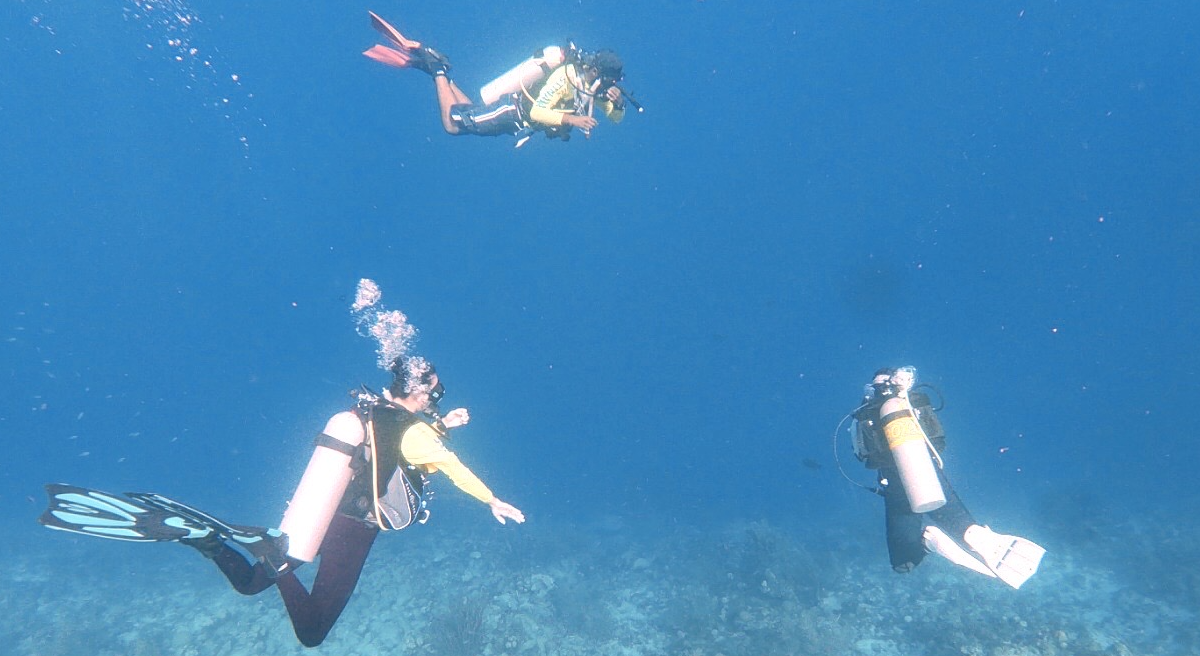
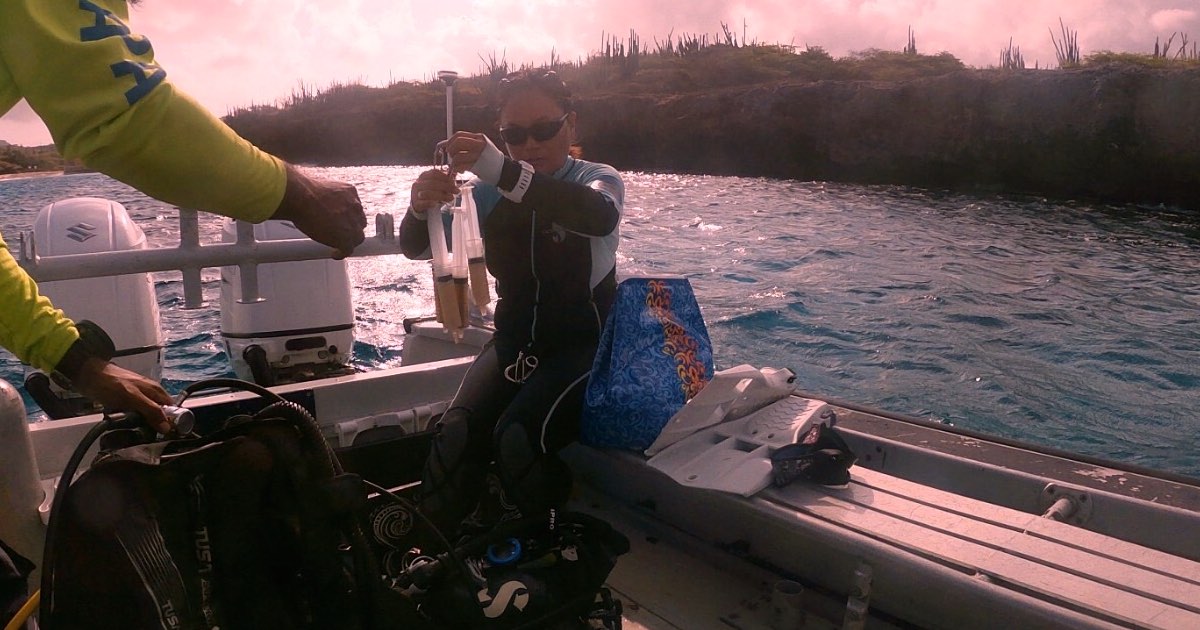
We sail for about 45 minutes with four STINAPA rangers and the SCTLD coordinator on one of their fast boats to the Queen Maxima Reserve. This part of the environment is forbidden for the public to dive. Yet STINAPA also wants to protect the underwater world here. Near Boka Slagbaai, the nature organization has started to provide sick pieces of coral with antibiotics. After a briefing, the rangers dive into the water. Their goal: ‘To help prevent certain types of coral from disappearing around Bonaire’. Each ranger has five large syringes containing liquid antibiotics. The product looks like a kind of soft paste. The team goes to a maximum depth of about 20 meters and checks every piece of infected coral.
In December 2023, STINAPA announced that it had already started administering antibiotics on the reefs of Bonaire . They do this to prevent the outbreak of SCTLD.
Delany de Obrega helps every week to preserve the corals of Bonaire. She is part of the rotation system of rangers who administer antibiotics in the two reserves (they also treat the King Willem Alexander No-Dive Reserve). The other diving sites will be done by volunteers in the future. The STINAPA ranger sees quick results from using antibiotics: “I really enjoy helping out. Every time we go, I learn from the treatments. For example, I learned how to put antibiotics on corals. It is interesting. I’ve been doing it for a while now and I feel like the treatments are working.”
Control with a lot of help
Twice a week, STINAPA rangers go to the two reserves to monitor approximately 50 to 100 meters for the development and prevention of SCTLD. One of the professionals may decide whether or not to treat the piece of coral. When it is decided to treat the coral, one of the rangers goes to the sick coral. He takes a long string from the spray bottle filled with antibiotics. With his fingers he rubs this antibiotic on the border between the sick and healthy coral. After application, photos are taken and, if necessary, a tag is applied to monitor the coral at a later stage.
Jeannine Toy has been appointed as head coordinator of the volunteers. From March she will lead a group of no fewer than 30 volunteers to tackle coral disease around Bonaire. Toy explains how the process works: “We are currently treating four types of coral. We apply the paste at the border of the sick and healthy coral. This will stop the disease from spreading further on that piece of coral. We place a mark on each treated piece. I also take a photo so that we can keep track of the results in a database. We currently do two sites per week. We will start with volunteers in March. Then we tackle ten sites at a time.”
Criticism
Yet not everyone agrees with administering antibiotics in the ocean. It is not yet known how marine life will respond to the drug. The long-term effect of applying the method is also not yet known. Yet Toy thinks that administering the drug will not pose an immediate danger to the underwater world: “Antibiotics will not kill fish if they accidentally eat it. In addition, the amoxicillin in the antibiotics will break down in sunlight within 24 to 48 hours. This is also the reason why we bring the antibiotics here in a cooler, for example. For most corals, the paste we apply will disappear within a week.”
Amoxicillin is one of the most commonly used antibiotics. It is often also used on animals. Those who are allergic to it are mainly only allergic to it. The risk for users is therefore low.
Positive results
It appears that treated pieces of coral ‘heal’ in a short time. It cannot really be cured. It does help to prevent the disease from spreading further. When the treated pieces of coral are examined, it appears that no new white spots appear. The piece of brain coral remains alive and does not die further. Toy is therefore of the opinion that the treatments give positive results: “I think that 70% of the treated corals remain alive. We cannot treat the dead parts. We can help coral that is still alive. So the treatment really makes sense.”
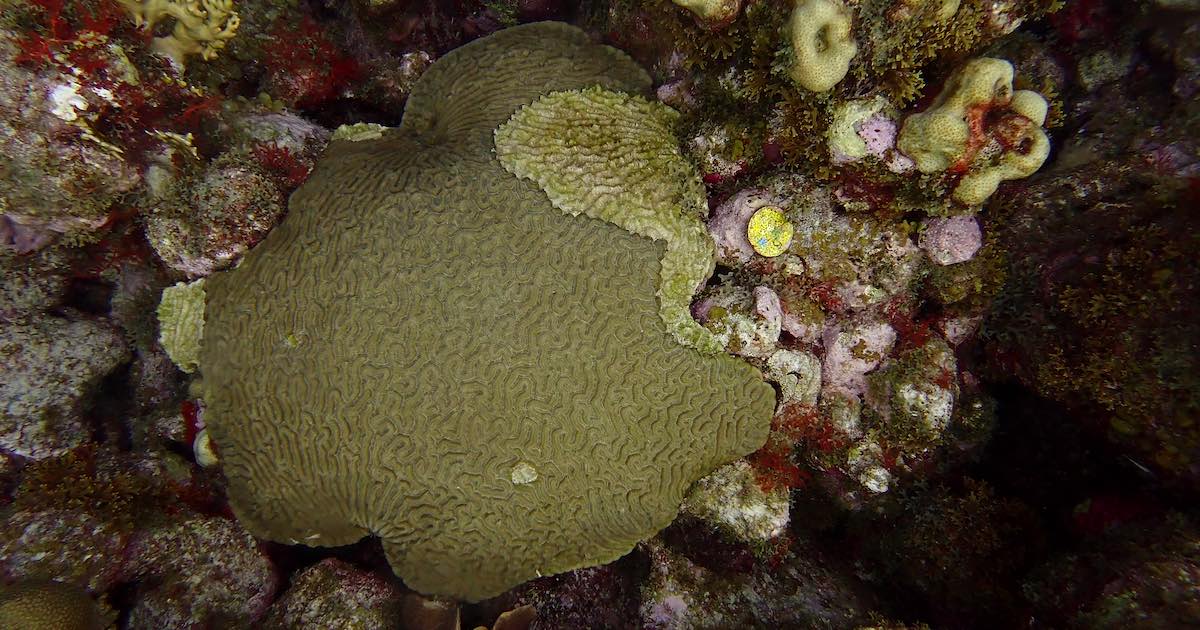
STINAPA ranger Arthur Domacasse also goes into the water every week to protect the coral. The energetic diver seems to know what he is doing underwater and is quick to act: “For me, underwater treatment is not necessarily different from any other dive I would do. I do have to be focused to control my buoyancy underwater. After all, you don’t want to damage other pieces of coral when I am treating something with antibiotics. What have I noticed so far from the treatment? I see a lot of change. First all the hard coral died. Now I see life again. In many cases it works.”
 Abycats' Thoughts
Oh! This is SO good!
LikeLike