Fracking will see the UK miss net‑zero emissions targets
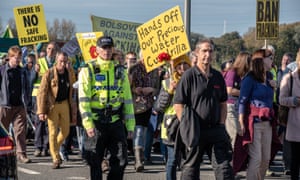
Ian Duncan, the UK’s minister for climate change (Letters, 31 August), vaunts our achievements and “ambitions to become one of the cleanest and most innovative energy systems in the world”. He allows a generous 30 years before a “net-zero emissions economy is achieved”, when the Intergovernmental Panel on Climate Change has made it clear that real change must be evident in fewer than a dozen years.
How can he hope to realise his longer-term targets while pursuing fracking as a transitional fuel? Investment in the hugely expensive development of fracking denies proper support to cheaper renewables, and delaying the switch ties the operator and investor into the production of a fossil fuel until a return is achieved. That exposes communities to the harms already documented, and contributes – by combustion, extraction and transportation – to the climate change the government hopes to mitigate.
The De Pfeffel Johnson government is a prey to the same “cognitive dissonance” as characterised previous governments, its fracking agenda running openly against the spirit of its commitments.
David Cragg-James
Stonegrave, North Yorkshire
• Ian Duncan omits to mention the government’s environmentally damaging actions. Why is fracking still being encouraged? And airport expansion? And why is several times more given in subsidies supporting fossil-fuel industries such as North Sea oil than renewables, which have seen a reduction? And why was car tax changed so that smaller engined cars now pay the same as larger ones, thus leading to an increase in the sale of SUVs? Any why remove the grant towards the purchase of plug-in electric hybrids and charge them the same vehicle tax as diesel or petrol cars? I’m sure there are many more examples of failure to have a coherent, consistent and powerful regime to address the climate crisis.
Michael Miller
Sheffield
 Abycats' Thoughts