The Message of a Scorching 2018: We’re Not Prepared for Global Warming
It’s hot. But it may not be the new normal yet. Temperatures are still rising.
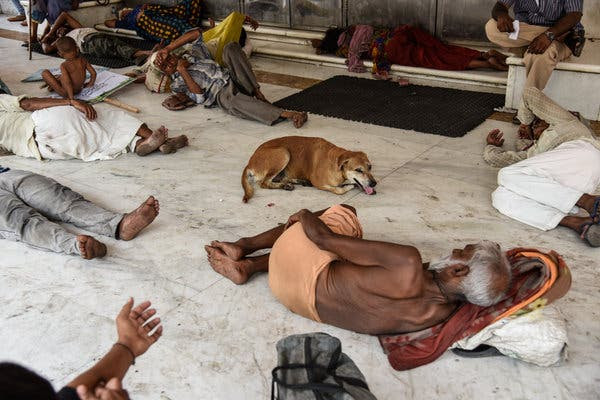
This summer of fire and swelter looks a lot like the future that scientists have been warning about in the era of climate change, and it’s revealing in real time how unprepared much of the world remains for life on a hotter planet.
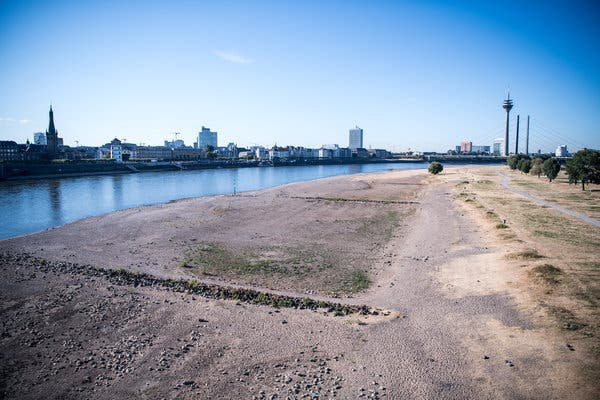
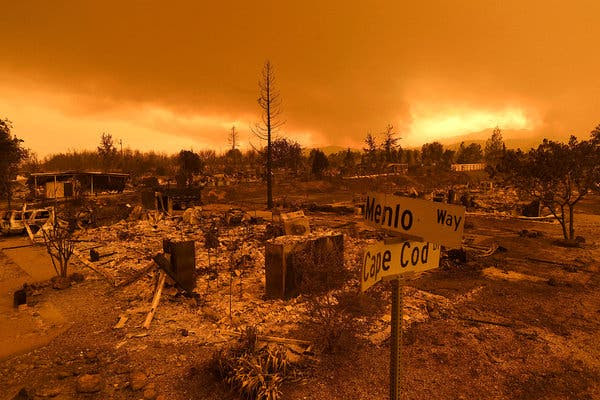
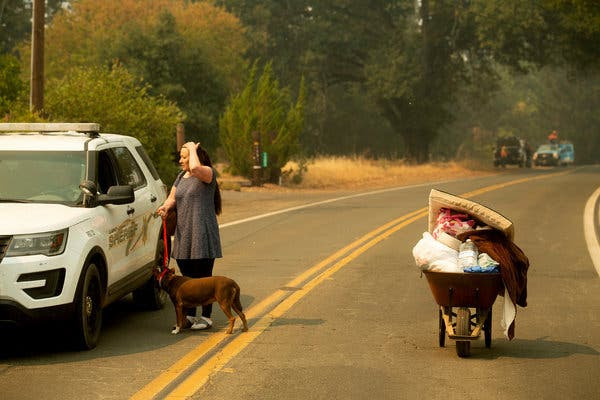
The disruptions to everyday life have been far-reaching and devastating. In California, firefighters are racing to control what has become the largest fire in state history. Harvests of staple grains like wheat and corn are expected to dip this year, in some cases sharply, in countries as different as Sweden and El Salvador. In Europe, nuclear power plants have had to shut down because the river water that cools the reactors was too warm. Heat waves on four continents have brought electricity grids crashing.
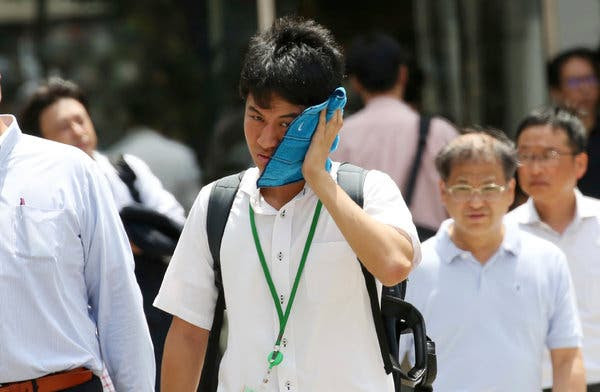
And dozens of heat-related deaths in Japan this summer offered a foretaste of what researchers warn could be big increases in mortality from extreme heat. A study last month in the journal PLOS Medicine projected a fivefold rise for the United States by 2080. The outlook for less wealthy countries is worse; for the Philippines, researchers forecast 12 times more deaths.
Globally, this is shaping up to be the fourth-hottest year on record. The only years hotter were the three previous ones. That string of records is part of an accelerating climb in temperatures since the start of the industrial age that scientists say is clear evidence of climate change caused by greenhouse gas emissions.
And even if there are variations in weather patterns in the coming years, with some cooler years mixed in, the trend line clear: 17 of the 18 warmest years since modern record-keeping began have occurred since 2001.
“It’s not a wake-up call anymore,” Cynthia Rosenzweig, who runs the climate impacts group at the NASA Goddard Institute for Space Studies, said of global warming and its human toll. “It’s now absolutely happening to millions of people around the world.”
Be careful before you call it the new normal, though.
Temperatures are still rising, and, so far, efforts to tame the heat have failed. Heat waves are bound to get more intense and more frequent as emissions rise, scientists have concluded. On the horizon is a future of cascading system failures threatening basic necessities like food supply and electricity.
For many scientists, this is the year they started living climate change rather than just studying it.
“What we’re seeing today is making me, frankly, calibrate not only what my children will be living but what I will be living, what I am currently living,” said Kim Cobb, a professor of earth and atmospheric science at the Georgia Institute of Technology in Atlanta. “We haven’t caught up to it. I haven’t caught up to it, personally.”
This week, she is installing sensors to measure sea level rise on the Georgia coast to help government officials manage disaster response.
Katherine Mach, a Stanford University climate scientist, said something had shifted for her, too.
“Decades ago when the science on the climate issue was first accumulating, the impacts could be seen as an issue for others, future generations or perhaps communities already struggling,” she said, adding that science had become increasingly able to link specific weather events to climate change.
“In our increasingly muggy and smoky discomfort, it’s now rote science to pinpoint how heat-trapping gases have cranked up the risks,” she said. “It’s a shift we all are living together.”
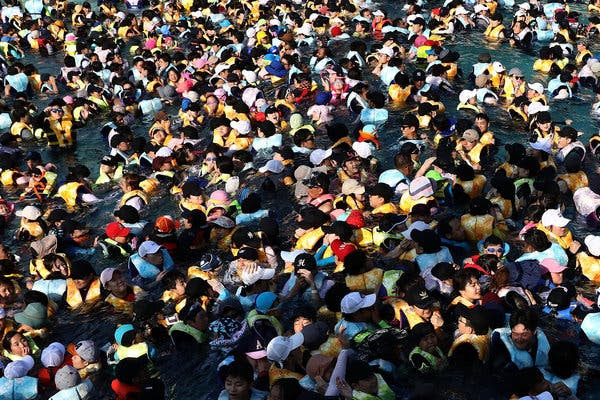
Globally, the hottest year on record was 2016. That was not totally unexpected because that year there was an El Niño, the Pacific climate cycle that typically amplifies heat.
More surprising, 2017, which was not an El Niño year, was almost as hot. It was the third-warmest year on record, according to the National Oceanic and Atmospheric Administration, or the second-warmest, according to NASA.
The first half of 2018, also not marked by El Niño, was the fourth-warmest on record, NOAA found.
In the lower 48 United States, the period between May and July ranked as the hottest ever, according to NOAA, with an average temperature of 70.9 degrees Fahrenheit, or 21.6 degrees Celsius, which was almost 5 percent above average. Sea levels continued their upward trajectory last year, too, rising about 3 inches, or 7.7 centimeters, higher than levels in 1993.
What does all that add up to?
For Daniel Swain, a climate scientist at the University of California Los Angeles, it vindicates the scientific community’s mathematical models. It doesn’t exactly bring comfort, though.
“We are living in a world that is not just warmer than it used to be. We haven’t reached a new normal,” Dr. Swain cautioned. “This isn’t a plateau.”
Against that background, industrial emissions of carbon dioxide grew to record levels in 2017, after holding steady the previous three years. Carbon in the atmosphere was found to be at the highest levels in 800,000 years.
Despite a global agreement in Paris two years ago to curb greenhouse gas emissions, many of the world’s biggest polluters — including the United States, the only country in the world pulling out of the accord — are not on track to meet the reductions targets they set for themselves. Nor have the world’s rich countries ponied up money, as promised under the Paris accord, to help the poor countries cope with the calamities of climate change.
Still, scientists point out that with significant reductions in greenhouse gas emissions and changes to the way we live — things like reducing food waste, for example — warming can be slowed enough to avoid the worst consequences of climate change.
Some governments, national and local, are taking action. In an effort to avert heat-related deaths, officials are promising to plant more trees in Melbourne, Australia, and covering roofs with reflective white paint in Ahmedabad, India. Agronomists are trying to develop seeds that have a better shot at surviving heat and drought. Switzerland hopes to prevent railway tracks from buckling under extreme heat by painting the rails white.
Climate scientists are also trying to respond faster, better. Ms. Rosenzweig’s team at NASA is trying to predict how long a heat wave might last, not just how likely it is to occur, in order to help city leaders prepare. Similar efforts to forecast the distribution of extreme rainfall are aimed at helping farmers.
Researchers with World Weather Attribution are working to refine their models to make them more accurate. “In Europe the warming is faster than in the models,” said Friederike Otto, an associate professor at Oxford University who is part of the attribution group.
Her group recently concluded that a human-altered climate had more than doubled the likelihood of the record-high temperatures in northern Europe this summer.
The impact of those records is being felt in multiple ways. The continent’s power supply is overstretched as air-conditioners are cranked up.
Then, there’s the impact of heat and drought on farms. In El Salvador, a country reeling from gang violence, farmers in the east of the country stared at a failed corn harvest this summer as temperatures soared to a record 107 degrees Fahrenheit, or about 41 degrees Celsius. The skies were rainless for up to 40 days in some places, according to the government.
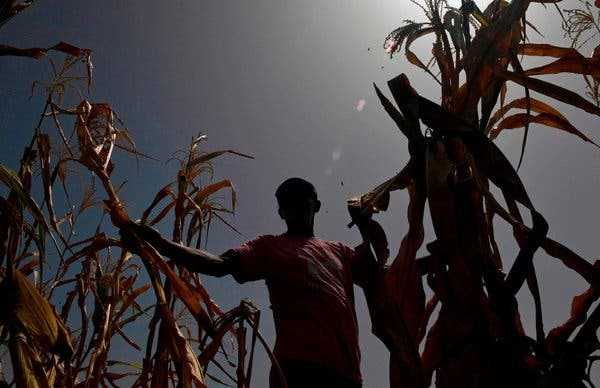
Wheat production in many countries of the European Union is set to decline this year. In Britain, wheat yields are projected to hit a five-year low. German farmers say their grain harvests are likely to be lower than normal. And in Sweden, record-high temperatures have left fields parched and farmers scrambling to find fodder for their livestock.
Palle Borgstrom, president of the Federation of Swedish Farmers, said in an interview that his group estimated at least $1 billion in agricultural sector losses.
“We get quite a few phone calls from farmers who are lying awake at night and worrying about the situation,” he said. “This is an extreme situation that we haven’t seen before.”
Christina Anderson contributed reporting from Stockholm, Nick Cumming-Bruce from Geneva, and Gene Palumbo from San Salvador, El Salvador.
Somini Sengupta covers international climate issues and is the author of “The End of Karma: Hope and Fury Among India’s Young.” @SominiSengupta • Facebook
Hothouse Earth Is Merely the Beginning of the End
Not the end of the planet, but maybe the end of its human inhabitants
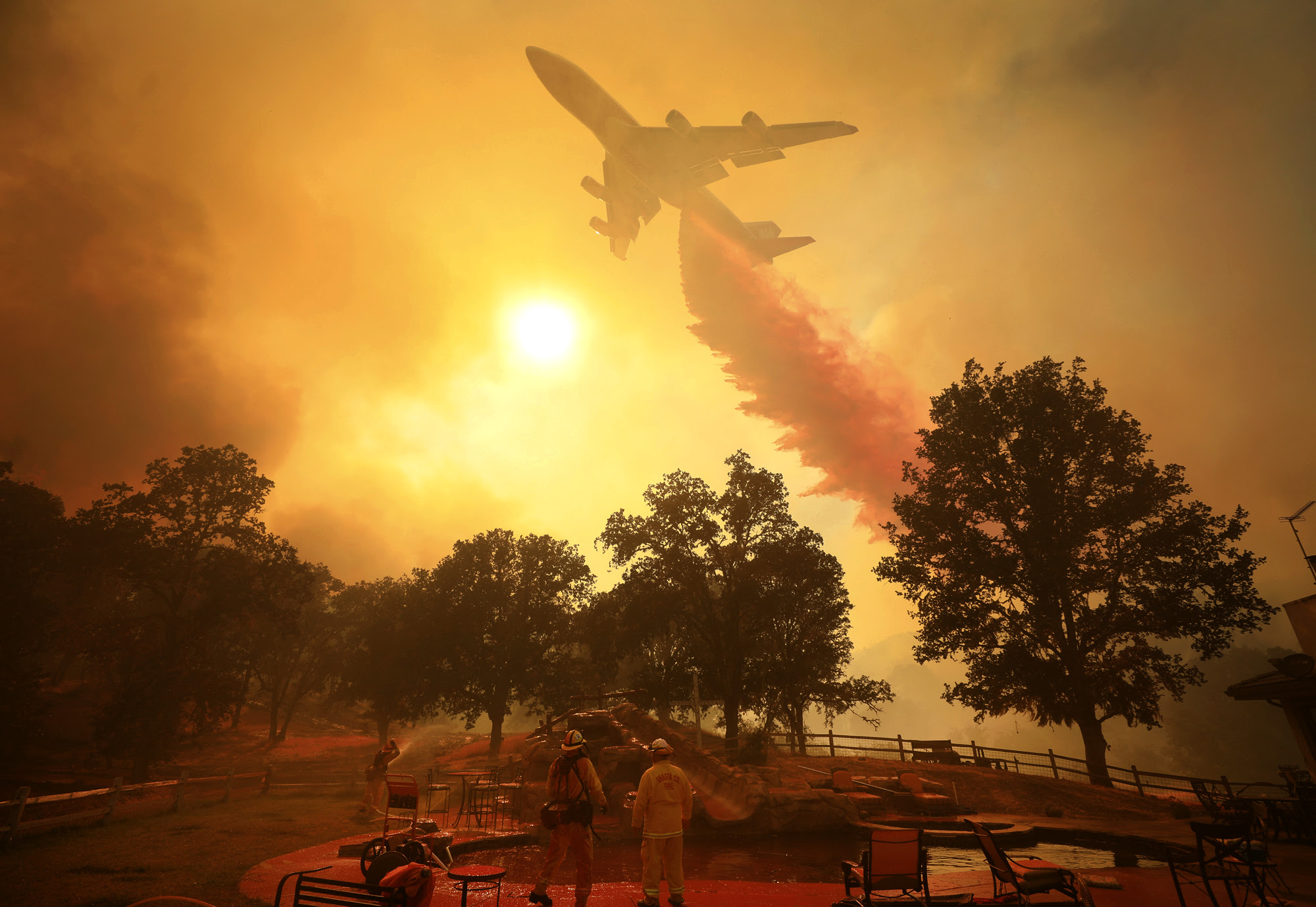
A 747 Global Airtanker makes a drop in front of advancing flames from a wildfire Thursday, August 2nd, 2018, in Lakeport, California.
Kent Porter /The Press Democrat/AP
“Our future,” scientist James Lovelock has written, “is like that of the passengers on a small pleasure boat sailing quietly above the Niagara Falls, not knowing that the engines are about to fail.”
I thought about Lovelock the other day as I drove across Idaho, watching plumes from a forest fire rise in the distance. My mom and two of my kids were texting me about their experience driving through Redding, the city in Northern California where a “firenado” had devastated the region and accelerated a wildfire that killed six people. Not far away, in Mendocino, the largest fire in California history was burning an area the size of Los Angeles.
On the radio, I listened to reports from around the world: in Athens, Greece, a fire killed 92 people; in Japan, a brutal heat wave claimed 80 lives. This summer, wildfires have been burning in the United Kingdom, Denmark, Estonia, Finland, Latvia, Malta, the Netherlands, Poland and Germany. There are even wildfires in the Arctic. High temperature records have been shattered all around the globe, including in Death Valley, California, which set the record for the hottest month ever recorded on the planet, with 21 days over 120 degrees. Our world is aflame.
I doubt any of this would surprise Lovelock, who is one of the most original thinkers of the 20th century, as well as one of the most articulate prophets of doom. As an inventor, he created a device that helped detect the growing hole in the ozone layer and jump-start the environmental movement in the 1970s. And as a scientist, he introduced the revolutionary theory known as Gaia — the idea that our entire planet is a kind of super-organism that is, in a sense, “alive.” Once dismissed as New Age quackery, Lovelock’s vision of a self-regulating Earth now underlies virtually all climate science.
And in Lovelock’s view, the Earth’s self-regulating system is seriously out of whack, thanks largely to our 150-year fossil fuel binge. “You could quite seriously look at climate change as a response of the system intended to get rid of an irritating species: us humans,” Lovelock told me in 2007 when I visited him at his house in Devon, England, for a profile in Rolling Stone. “Or at least cut them back to size.”
And Lovelock did not mince words about the future that we are creating for ourselves by ignoring the warning signs on our superheated planet. As I wrote at the time:
In Lovelock’s view, the scale of the catastrophe that awaits us will soon become obvious. By 2020, droughts and other extreme weather will be commonplace. By 2040, the Sahara will be moving into Europe, and Berlin will be as hot as Baghdad. Atlanta will end up a kudzu jungle. Phoenix will become uninhabitable, as will parts of Beijing (desert), Miami (rising seas) and London (floods). Food shortages will drive millions of people north, raising political tensions. “The Chinese have nowhere to go but up into Siberia,” Lovelock says. “How will the Russians feel about that? I fear that war between Russia and China is probably inevitable.” With hardship and mass migrations will come epidemics, which are likely to kill millions. By 2100, Lovelock believes, the Earth’s population will be culled from today’s 6.6 billion to as few as 500 million, with most of the survivors living in the far latitudes – Canada, Iceland, Scandinavia, the Arctic Basin.
A new paper published last week in the Proceedings of the National Academy of Sciences called “Trajectories of the Earth System in the Anthropocene” reached more or less the same conclusion, even if was stated in more general scientific terms (and of course minus any reference to a “culling” of Earth’s population).
The paper, which was widely covered by everyone from USA Today to Al Jazeera, projected a very Lovelock-ian view of our world, arguing that even if we managed to hit the carbon emissions targets set in the Paris Climate Accord, we still might trigger a series of accelerating climate-system feedback loops that would push the climate into a permanent hothouse state, with a warming of four, five or even six degrees Celsius. If that were to happen, the paper argued, “Hothouse Earth is likely to be uncontrollable and dangerous to many, particularly if we transition into it in only a century or two, and it poses severe risks for health, economies, political stability (especially for the most climate vulnerable), and ultimately, the habitability of the planet for humans.”
The idea that the Earth’s climate system has certain tipping points, or thresholds, is nothing new. Small changes in the temperature of the Southern Ocean, for example, might have big implications for the West Antarctic ice sheet, leading to an ice cliff collapse that could raise sea levels by 10 feet or more in a very short (geologically-speaking) period of time. Richard Alley, a glaciologist at Penn State, has described the Earth’s climate as a highly complex system that, based on small forces that are still only dimly understood, tends to lurch from one steady state to another. “You might think of the climate as a drunk,” Alley wrote in his great book The Two Mile Time Machine: Ice Cores, Abrupt Climate Change, and Our Future, which was first published in 2000. “When left alone, it sits; when forced to move, it staggers.”
There is no groundbreaking new science in the Hothouse Earth paper. Rather, it’s a synthesis of what is already known and presented in a compelling way. But it is an important reminder of two key attributes of the climate crisis. The first is that the real threat of climate change is not a slow slide into a warmer world; it’s a fast change into a radically different climate. How fast that change could happen, and how radically different it might be, no one can say for sure. But by continuing to dump fossil fuels into the atmosphere at an ever-increasing rate, we are rolling the dice. As Columbia University scientist Wally Broecker famously put it, “If you’re living with any angry beast, you shouldn’t poke it with a stick.”
And we are not doing nearly enough to fight it. The Hothouse Earth paper points out — again, in a very Lovelock-ian way — that fighting climate change is not just a matter of reducing carbon pollution in the future, important as that obviously is. It’s about taking active stewardship of the planet now, and thinking more holistically about how to manage it now. Among other things, that means giving up the notion that there is a “solution” for climate change and accepting the idea we are living in a rapidly changing world now. How will we engineer drinking water systems to deal with this? How will we manage forests? How are coastal cities going to adapt to — or intelligently retreat from — rapidly rising seas?
“The heat and fires we’re seeing this summer is worrisome,” Alley tells Rolling Stone, in his typically understated way. “There are certainly human fingerprints on a lot of it.” But, Alley points out, this is just the beginning. As of now, the Earth has warmed just 1 degree Celsius. “Dealing with what we’re seeing now is the easy stuff,” Alley says. “With each additional degree of warming, the impact will be greater.” Alley is most concerned about physical systems with likely tipping points, such as the West Antarctic ice sheet.
He’s also concerned about biological tipping points. “If the oxygen level in oceans drops just a little, it could have a big and immediate impact on sea life,” Alley says. “A fire in Brazil could lead to rainforest being replaced with savannah, which would have all kinds of consequences for biological diversity, as well as for carbon uptake.”
But it’s the tipping point in human systems that worry Alley the most. He points to the recent drought in the Middle East, which was a key driver in the Syrian civil war. “You can see the resilience of different political systems. During the drought, Israel was OK. But Syria was not.”
Maybe this is the summer that we figure out that, as Lovelock put it, our engines are about the fail and we are indeed headed over the falls. But I thought that after Hurricane Katrina, too. And after Sandy. Instead, America elected a president who thinks climate change is a hoax and tweets insanely about how California doesn’t have enough water to fight the fires because it has “diverted” rivers into the Pacific. (As University of California at Merced professor LeRoy Westerling explained to NPR, “Even if you built a massive statewide sprinkler system and drained all of our natural water bodies to operate it, it wouldn’t keep up with evaporation from warmer temperatures from climate change.”)
When I talked to Lovelock in his cottage in Devon 11 years ago, he wasn’t worried about the fate of the planet. “Gaia is a tough bitch,” he told me. Whatever we humans do to it, he argued, it will eventually recover its equilibrium, even if it takes millions of years. What’s at stake, Lovelock believes, is civilization. “I don’t see it being too long before forms of life, based on the idea of [artificial intelligence] and so on, take over and run the planet for heaven knows how long.”
What about humans? When asked about this recently, Lovelock told the BBC: “Don’t you consider it possible that we’ve had our time?”
 Abycats' Thoughts